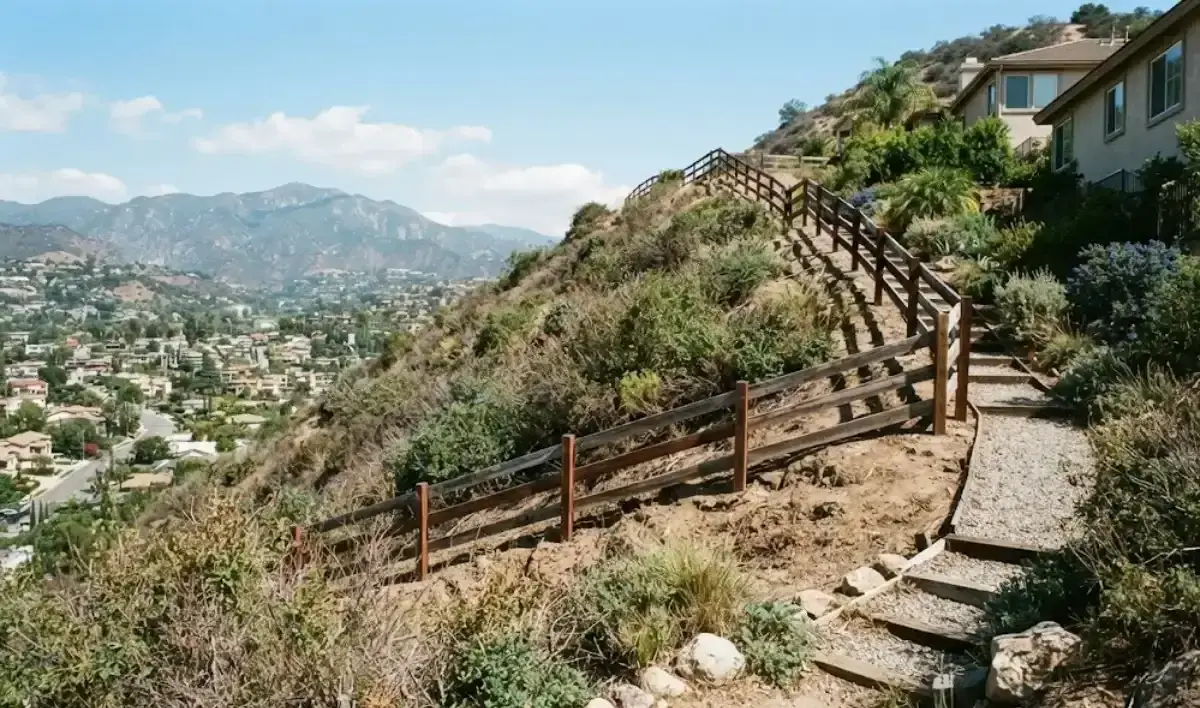
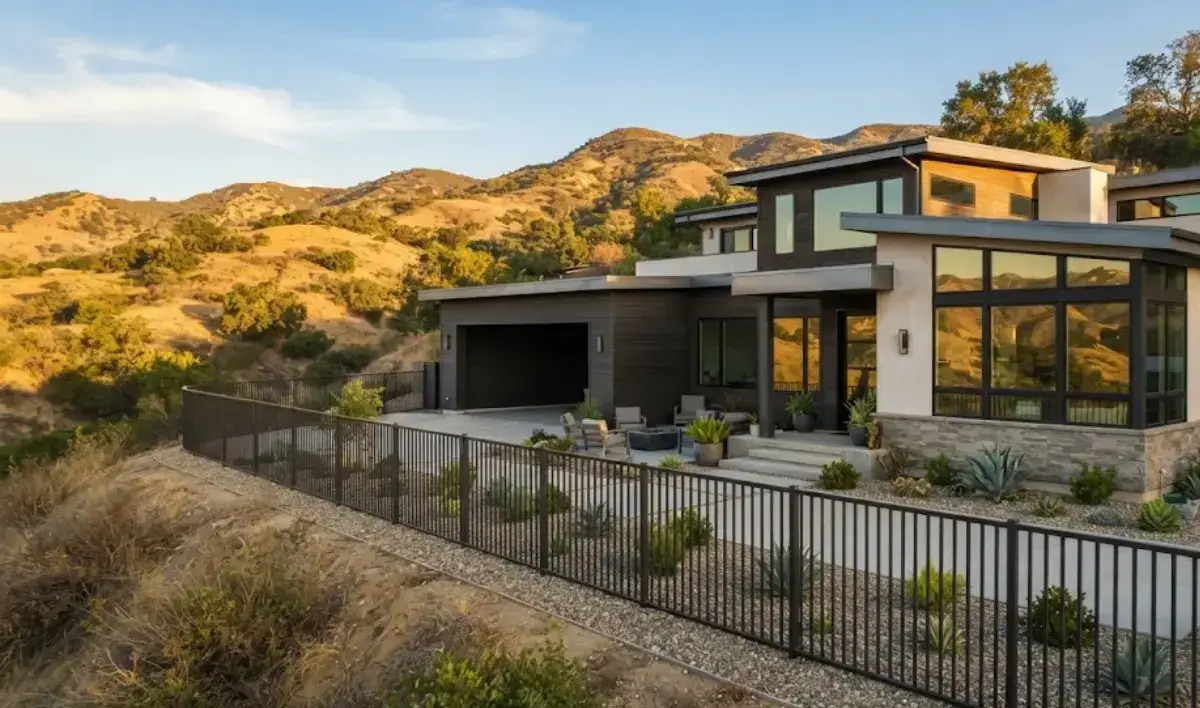
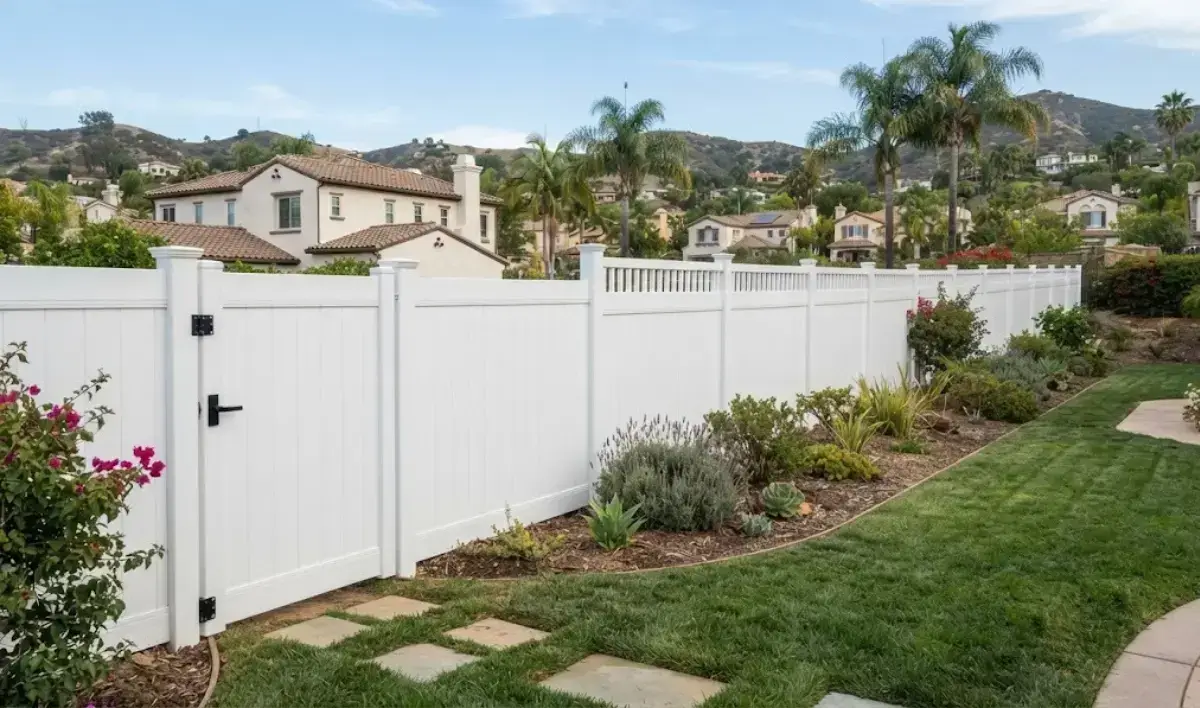
Fencing a flat backyard and fencing a hillside lot in Glendale are not the same job. The slope changes how panels get built, the soil underneath is often expansive clay that shifts with the seasons, and water runs downhill toward your posts instead of sitting still. None of that makes a hillside fence impossible, it just means the contractor needs a different playbook. If you’re in La Crescenta-Montrose, Chevy Chase Canyon, or anywhere else in Glendale where the yard tilts more than a few degrees, here’s what goes into doing it right.

Why a Sloped Lot Changes the Whole Approach
A fence built for flat ground assumes every post sits at the same height and every panel is a rectangle. On a hillside, that assumption breaks down fast. The crew decides, panel by panel, whether to follow the grade in steps or angle the rails to match the slope, a call that affects cost, appearance, and how well the fence keeps animals in or out. Add in drainage, soil movement, and hillside lots often sitting close to retaining walls or canyon edges, and you’ve got far more variables than a flat, straight yard.
Stepped vs. Racked Installation, and Why It’s Not Just a Style Choice
Stepped Fencing Follows the Grade in Sections
Stepped installation keeps each panel level and horizontal, then drops the next section a few inches to follow the slope, like stair steps. It’s the more affordable option and works with standard pre-built panels, which is why most contractors default to it. The tradeoff is the gap under the lower edge of each step, barely noticeable on a gentle slope but wide enough on a steep lot for a dog to squeeze through, which matters if pet containment is the whole reason you’re fencing the yard.

Racked Fencing Angles the Rails Instead
Racking tilts the horizontal rails to match the ground’s angle while keeping posts vertical, so the fence line follows the dirt with no stair-stepped gaps. It creates a smoother, more uniform fence line and closes the gaps along the slope, but each panel has to be tailored to the site’s angle, increasing both labor time and material costs. For steep sections, racking is usually worth the extra cost; for gentler grades, stepping is often the more practical call.
Glendale’s Clay Soil Is the Part Most Homeowners Don’t See Coming
Much of Glendale’s hillside terrain sits on expansive clay, the kind that swells when wet and shrinks when dry. That movement puts real pressure on a fence post. After a handful of wet-and-dry cycles, a post set at flat-yard depth can start to lean, heave, or loosen at the base, sometimes within a couple of years. It’s not a defect, it’s just what clay does when moisture swings against a shallow footing.
How Deep Hillside Fence Posts Actually Need to Go
The fix isn’t complicated, just more depth and better drainage than a standard install. Posts need to reach below the soil’s “active zone,” the layer that expands and contracts with moisture, often meaning footings 3 to 4 feet deep versus the 2 feet that’s fine on flat, stable ground. Backfilling with gravel instead of solid concrete gives water somewhere to go instead of trapping it against the post, keeping posts from shifting over time. Metal posts also benefit from galvanized coating, since saturated clay is more corrosive than dry, sandy soil.

A fence on a slope has to deal with water moving through the yard, not just sitting in it. Without a runoff plan, water tends to pool at the base of a post line or wash out the soil around it during a wet winter. Most hillside installs in Glendale benefit from a gravel trench or French drain alongside the fence line to redirect water away from the posts, a small add-on cost that’s cheaper than resetting leaning posts two years later.
Do You Need a Retaining Wall Instead of a Fence?
Sometimes the real answer to “how do I fence this slope” is that the slope needs holding back first. If soil is actively sliding or eroding, a retaining wall handles that job, and the fence sits on top of it, not instead of it. Glendale’s code treats this pairing carefully: walls four feet or taller usually need their own permit, and in the Hillside Commercial zone, a fence atop a wall can’t exceed six feet above it. Figure out early which problem you’re solving, erosion or privacy, since that changes what gets built first.
What Hillside Fencing Actually Costs in Glendale
Expect to pay more than a flat-yard quote for the same length of fence. Racked panels, deeper footings, gravel drainage, and the extra labor of working on an incline all add up. As a rough range, hillside installation in Glendale often runs 20 to 40 percent above a flat-yard project, depending on slope and whether stepped or racked panels suit your property.
How Apex Fence & Gate Approaches Hillside Properties
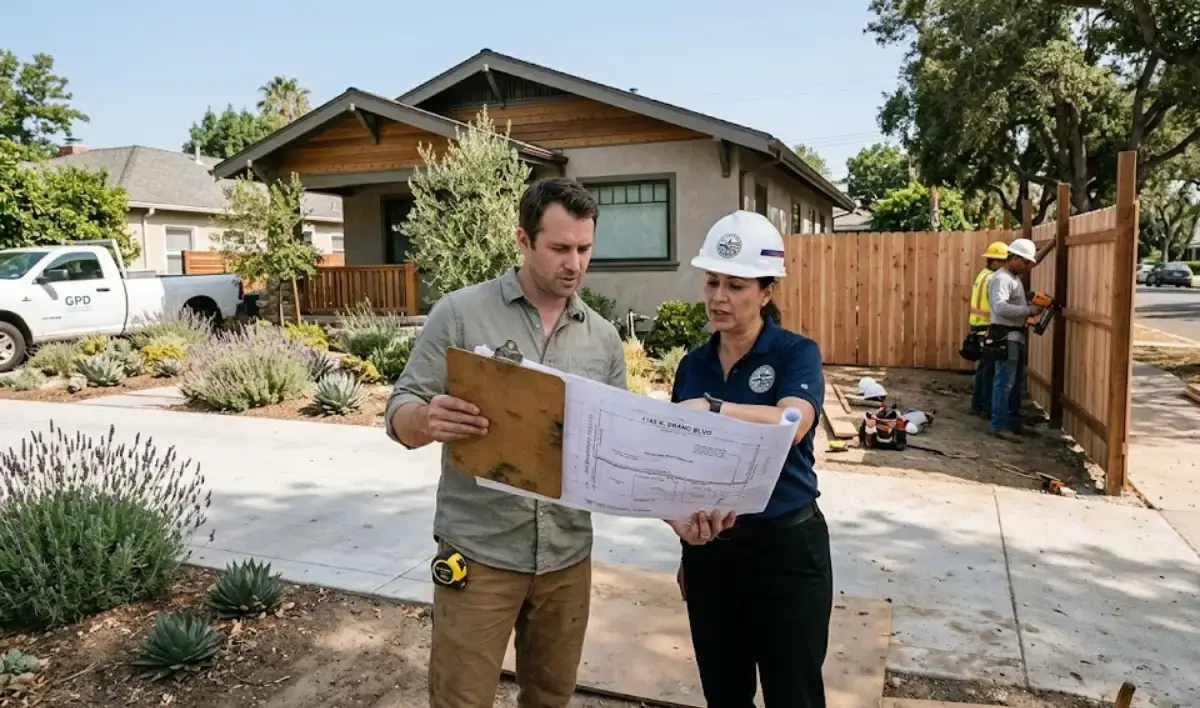
We walk every hillside lot before quoting it, since slope, soil, and drainage can look completely different from the lot next door. From there we recommend stepped or racked panels, the right footing depth for the soil, and any drainage work the site needs before a post goes in the ground.
Frequently Asked Questions
Is stepped or racked fencing better for a steep slope?
Racked fencing usually holds up better on steep grades, since it eliminates the gaps stepped panels leave underneath. Stepped fencing works fine on gentler slopes and costs less.
Why do fence posts lean on Glendale hillside properties?
Expansive clay soil swelling and shrinking with moisture is the most common cause, especially when posts were set at flat-yard depth instead of below the soil’s active zone.
Do I need a permit for a hillside fence in Glendale?
Not usually for a fence under seven feet, but a retaining wall four feet or taller typically needs its own permit, and hillside zoning can cap fence height above it.
How much deeper do hillside fence posts need to be?
Many hillside installs need footings around 3 to 4 feet deep, compared to roughly 2 feet on stable, flat ground, to get below the soil layer that moves with moisture.
Does hillside fencing cost a lot more than flat-yard fencing?
It typically runs 20 to 40 percent higher due to custom panel cuts, deeper footings, and drainage work, though the exact difference depends on the slope and materials chosen.
Get a Hillside Fence Quote That Actually Accounts for Your Slope
Hillside lots rarely fail because someone chose the wrong material, they fail because the installation didn’t account for the slope, the soil, or the water moving through it. If you’re planning a fence on a sloped property, reach out to Apex Fence & Gate for a site visit and a quote built around your actual terrain, not a flat-yard estimate.