If you live anywhere near the Verdugo Mountains or the San Gabriel foothills, you’ve probably thought about your fence differently since the January 2025 Eaton Fire devastated parts of Altadena and affected nearby communities. A fire-resistant fence is simply one built from materials that won’t ignite from a wind-blown ember, think steel, aluminum, or masonry, rather than wood or unrated vinyl. That sounds obvious until you realize most Glendale homes still have a combustible fence bolted to the house. This guide covers which materials actually hold up, what California’s defensible space rules say about fencing, and how to protect your property without turning your backyard into a chain-link box.

Why Fire-Resistant Fencing Matters in Glendale, CA
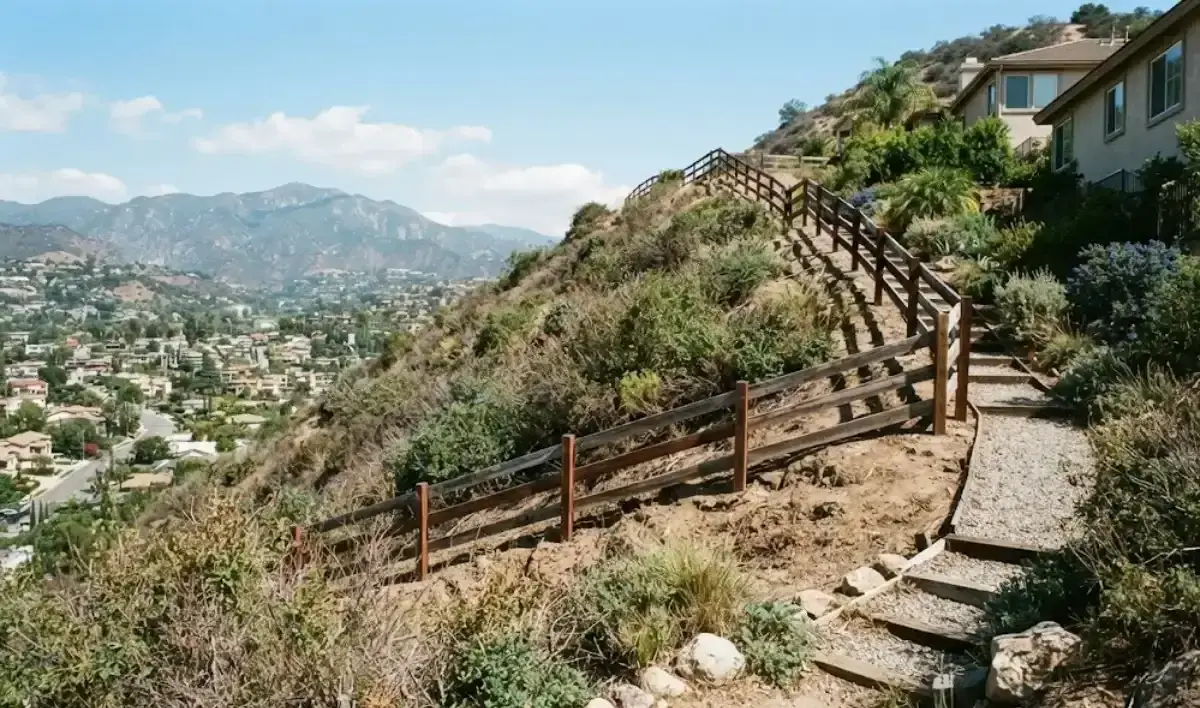
Glendale sits right at the base of the Verdugo Mountains and San Rafael Hills. Neighborhoods like La Crescenta-Montrose, Chevy Chase Canyon, and Verdugo Woodlands border wildland vegetation directly, no buffer, just a fence line and brush. Homes here fall under California’s Fire Hazard Severity Zone mapping, and during a Santa Ana wind event, embers can travel a mile ahead of the actual fire. A wood fence bolted to your house doesn’t just sit there looking rustic; it acts as a wick. Once it catches, flames have a direct line to your siding, eaves, and patio cover. Swapping that connection point is one of the cheapest, highest-impact fixes a homeowner can make.
California’s Defensible Space Zones
The state organizes wildfire hardening into three zones around a structure, and fencing rules change depending on which one your fence sits in.
Zone 0 (0–5 Feet): The One That Actually Restricts Fence Materials
The California Board of Forestry and Fire Protection continues refining Zone 0 (the first five feet around a structure) under AB 3074. Requirements are evolving, and implementation timelines can vary depending on the property’s fire hazard designation and local jurisdiction. Before installing or replacing fencing near your home, check the latest guidance from Glendale Building & Safety and CAL FIRE.
Wildfire regulations continue to evolve, so homeowners should verify the latest local requirements before beginning any fencing project.

Zones 1 and 2 (5–100 Feet): More About Maintenance Than Material
Zone 1 runs five to thirty feet out and is mostly about vegetation spacing, not fence material. Zone 2 stretches from thirty to a hundred feet and deals with overall fuel load across the property. Neither zone legally forces you into non-combustible fencing. That said, a wood fence buried in dry leaves and dead brush is still fuel, no matter which zone it’s technically in, so keeping the area clear matters almost as much as what the fence is made of.
Most Fire-Resistant Fence Materials for Glendale Homes
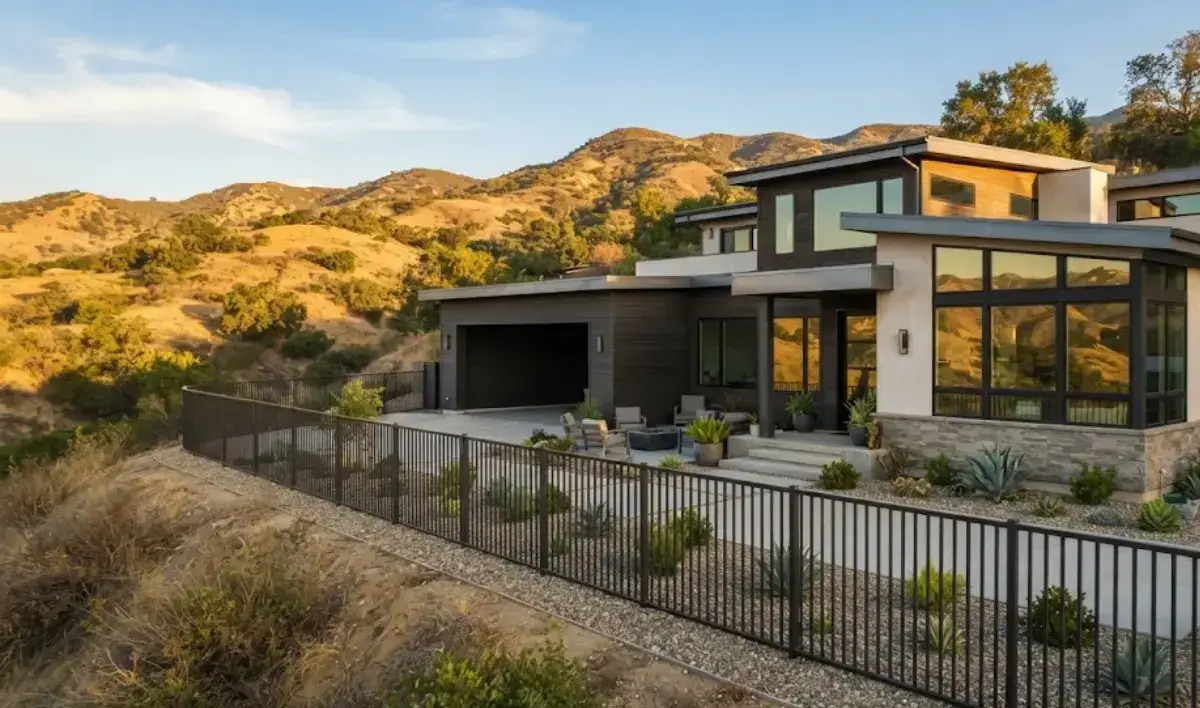
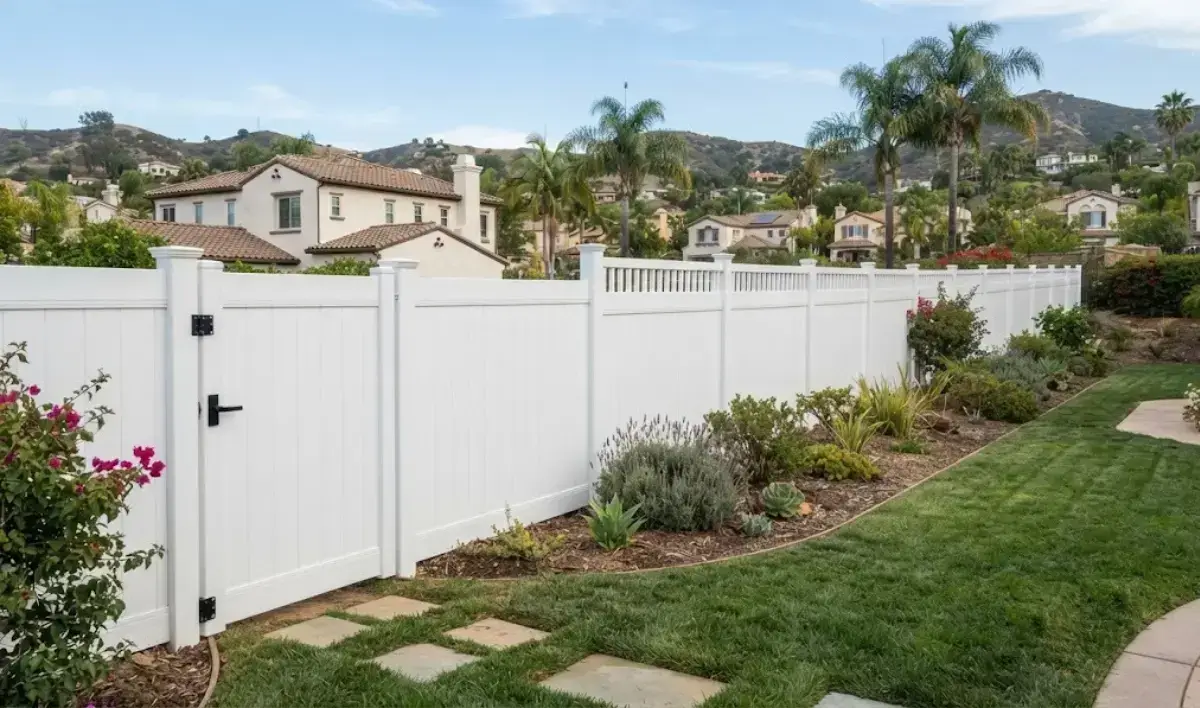
Steel and wrought iron sit at the top of the list. Metal doesn’t ignite, and it holds its shape even in direct flame contact. Aluminum is close behind, non-combustible, lighter on the wallet than wrought iron, and close to zero maintenance. Masonry, stucco-clad block, and stone walls are essentially fireproof, and they double as a sound barrier if your property backs up to open space. Vinyl won’t catch fire from a stray ember the way wood does, but sustained direct flame will soften and melt it, so it belongs somewhere past the five-foot line, not attached to the house. Wood comes in last. It’s the material most likely to catch from a wind-blown ember, and it’s what investigators keep finding at the start of the ignition chain after a fire moves through.
Keeping a Wood Fence in Glendale’s Fire Hazard Zones
Most homeowners we talk to don’t want an all-metal yard, and they don’t need one. The common workaround: a short non-combustible section, five feet of steel, aluminum, or masonry, right where the fence meets the house, then a normal transition to wood further out. That break in material stops embers from riding the fence line straight into the structure while still letting you keep the look you actually wanted for the rest of the yard. Where exactly that transition sits depends on your home’s footprint and anything attached to it, like a patio cover, so it’s worth having a local contractor walk the property first.

Fire-Resistant Fencing Permits and Insurance in Glendale
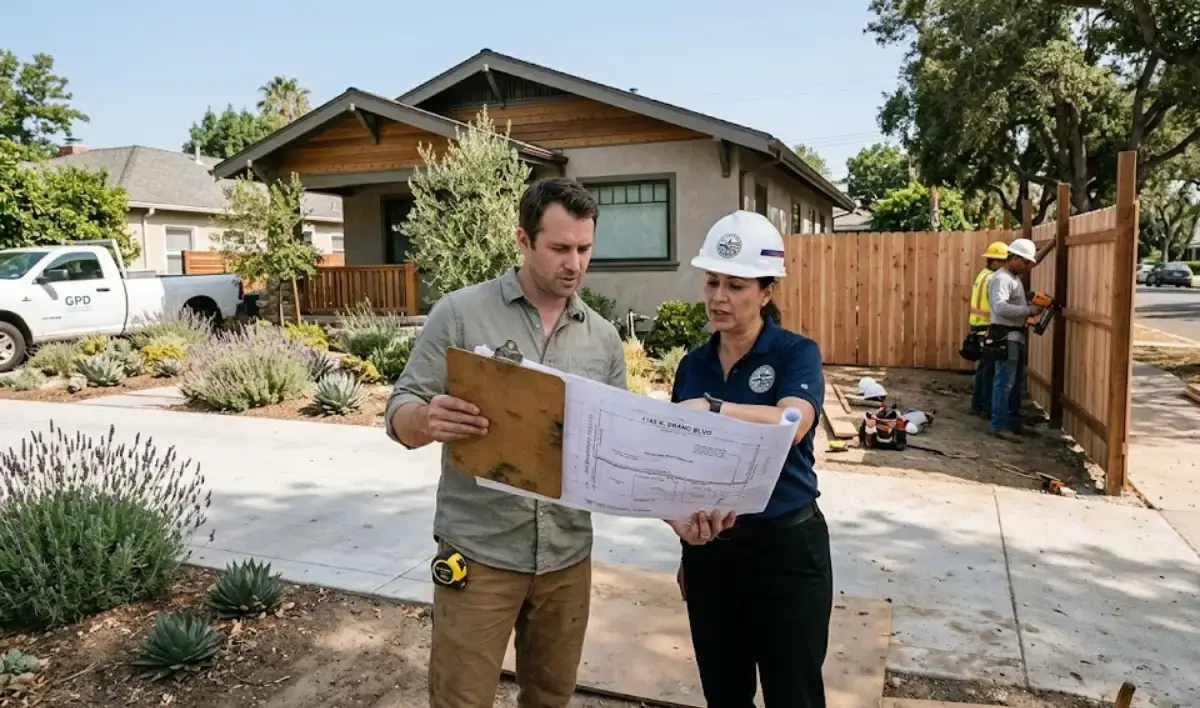
Most standard fence replacements in Glendale don’t need a separate building permit unless the fence runs over seven feet, includes a retaining wall, or sits on a hillside or near a public right-of-way. If your property falls inside a designated Fire Hazard Severity Zone, though, confirm current requirements with Glendale Building & Safety before starting your project, especially for hillside properties, retaining walls, or fences near public rights-of-way. On the insurance side, several California carriers are considering wildfire-hardening improvements, which may include non-combustible fencing near structures, as part of overall wildfire risk assessments and renewal decisions. Replacing a combustible fence near the house can help on both fronts, and it’s worth weighing material costs using our Glendale fence cost breakdown.
How Apex Fence & Gate Handles This
We design fire-conscious fencing for Glendale’s hillside properties, pairing non-combustible material near the home with whatever style you want for the yard. We’ll walk the property, flag where Zone 0 clearance applies, and put together a material plan that fits current defensible space guidance without gutting your whole fence line.
Frequently Asked Questions
What’s the most fire-resistant fence material?
Steel and wrought iron. Both are fully non-combustible and hold together under direct flame. Aluminum and masonry come in close behind, with less upkeep required.
Can I still have a wood fence in Glendale’s fire zones?
Yes, as long as it isn’t touching or within five feet of your home. A short non-combustible section near the house with wood beyond that is the standard workaround.
Do I need a permit for a fire-resistant fence in Glendale?
Usually not for a standard-height replacement. Hillside lots, retaining walls, and properties inside a Fire Hazard Severity Zone are the exceptions, so check with Building and Safety first.
What exactly is Zone 0?
The five-foot ember-resistant ring around your home. California is phasing in rules against combustible materials there, fencing, gates, and anything stored against the structure included.
Does any of this affect my insurance?
It can. A growing number of insurers factor ember-resistant hardening, including fence material and clearance from the house, into wildfire risk scoring and renewal terms.
Talk to Us About Fire-Resistant Fencing Before Fire Season
Fire-resistant fencing is one of the more affordable upgrades a Glendale homeowner can make, especially if you’re anywhere near the Verdugo Mountains or the San Gabriel foothills. If you’re replacing an existing fence or planning a new installation, we’ll evaluate your property’s layout, identify areas where non-combustible materials make the biggest difference, and recommend fencing options that balance wildfire resilience, appearance, and budget.